
How to Choose Winter Boots for Snow and Ice
Cold or wet feet can ruin an entire winter day. In Canada, where snow, slush and icy sidewalks all show up together, winter boots are one of the most important things you own. Here is what to check before you buy.
1. Waterproofing comes first
Snow melts on your boots and seeps in unless they are protected. Look for:
- A rubber or waterproof lower that rises above the toe box.
- A gusseted tongue sewn to the sides so snow can't get in through the laces.
- Treated leather or water-resistant materials on the upper.
Note the difference between "water-resistant", which handles light snow and splashes, and "waterproof", which you want for slush and long walks in snow.
2. Insulation
Boots lined with wool, faux fur or modern insulation keep your feet warm. The longer you stand still outside, the more insulation you need. If you walk a lot, medium insulation with good wool socks is usually enough.
3. A sole that grips ice
Slipping on icy sidewalks is one of the most common winter accidents. Choose a sole that has:
- Deep, widely spaced lugs that bite into snow without clogging.
- Rubber that stays flexible in the cold, since some rubbers harden and lose grip.
- Enough width to keep you stable.
4. The right height
- Ankle boots: practical for the city and daily commuting.
- Mid to tall boots: better for deep snow, parks and unploughed paths.
5. Fit with winter socks
Try boots on with the thick wool socks you'll actually wear. Your toes should move freely: a tight boot restricts circulation, and your feet get cold faster even with great insulation.
Protecting boots from road salt
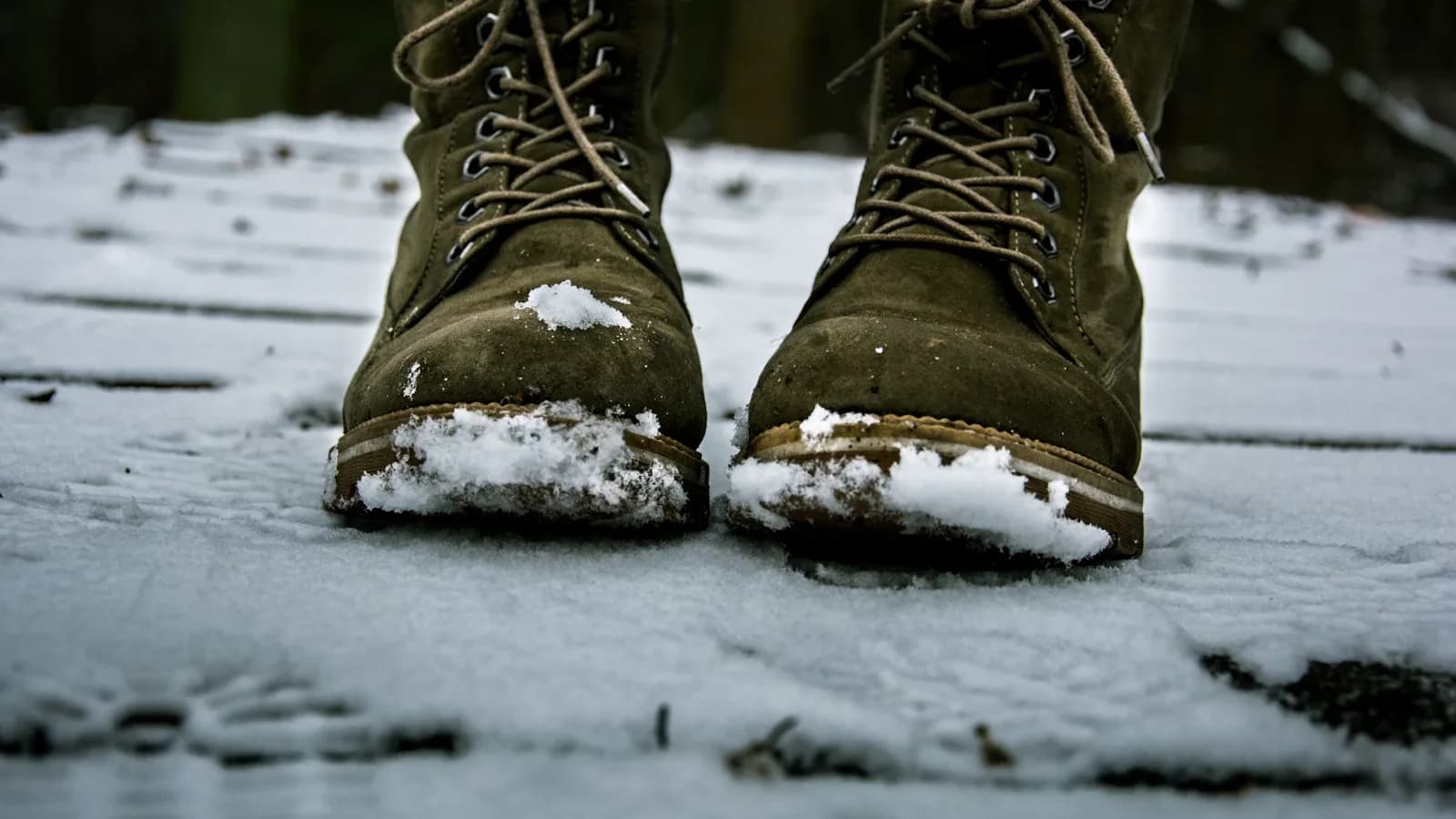
Salt is used widely to melt ice on roads, and it leaves white stains that can damage leather over time.
- Wipe your boots with a damp cloth when you get home.
- For stubborn stains, use a mild mix of water and white vinegar, then wipe with clean water.
- Let boots dry away from direct heat so the leather doesn't crack.
- Reapply a water-repellent treatment now and then.
Frequently asked questions
Can I wear sneakers in winter?
On dry days, yes. But most sneakers aren't waterproof and their soles don't grip ice well.
How many pairs of winter boots do I need?
One practical waterproof pair for everyday use is usually enough. Add a dressier boot for work and events if you like.
Browse boots and shoes in the Nile Mall shoes section and find the right pair for your winter.